

MSC-2 test record
Last test recorded: 24 October 2026
- Tested · 24 OctoberSatellite messages through Android
- Unit 0001 sent and received messages over Iridium through the app. Read the recorded result.
- Next field testSatellite messages without a phone
- MSC-2 has passed mesh-to-modem bench routing. The full mesh satellite exchange is proven on the earlier 9603 node.
- UnconfirmedMSC-2 with iOS
- The published iOS satellite tests use the earlier 9603 node. See platform support.
This record is for MeshSat Compact v2 (MSC-2): LILYGO T-Beam Supreme and RockBLOCK 9704-SMA. Bench checks establish individual functions. On 24 October 2026 the first complete unit sent and received satellite messages through the app; mesh mode over satellite is next on the complete unit.
MSC-2 / RockBLOCK 9704
24 October 2026: satellite messages both ways through the app
Under open sky, unit 0001 sent and received satellite messages through MeshSat Android: from the phone over Bluetooth to the unit’s RockBLOCK 9704, over Iridium to the MeshSat Hub, and from the Hub back to the phone. This establishes the complete unit’s satellite exchange through the app.
One retained uplink was “yo again”, received by the provider and Hub at 11:24:58 UTC. A plain-text reply sent through the Hub’s provider connection at 13:58 UTC was confirmed readable in Android. The exact reply text is not retained in this record, so it is not reproduced as a conversation transcript.
Earlier downlinks that day arrived as unreadable encoded text. The readable reply above used a plain-text send; the subsequent Hub encoding fix still needed a fresh field check. These records establish the radio exchange and distinguish it from verification of every send path.
24 October 2026: the modem from the cell, kept through a reboot
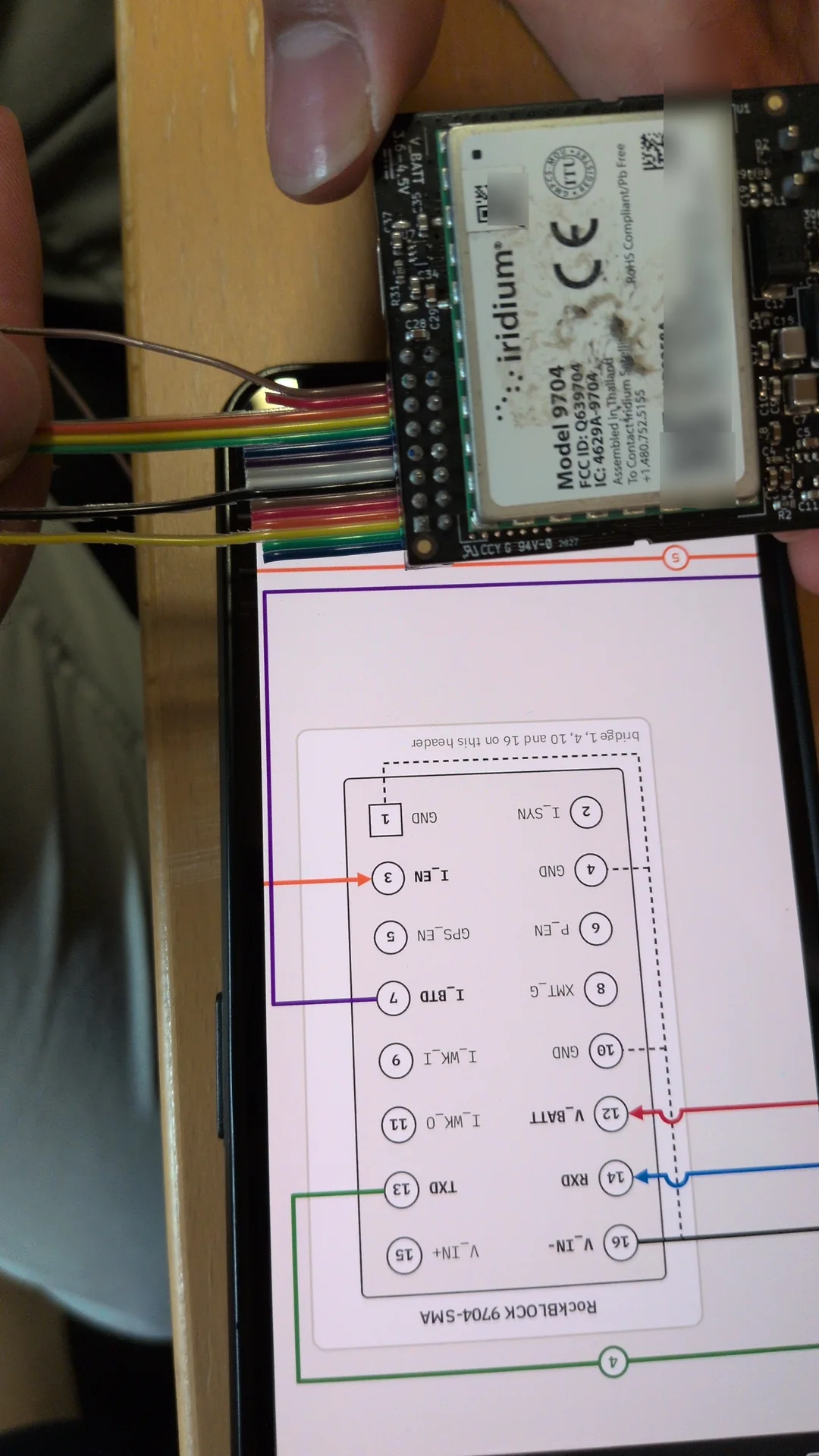
On prototype unit 0001, the first complete unit, the node brought the modem up from the cell through the modem’s own enable and booted lines, and the modem stayed up through a reboot of the node. A message from the node and a preset sent from a watch over LoRa both reached the modem’s queue in under a second, with no phone involved.
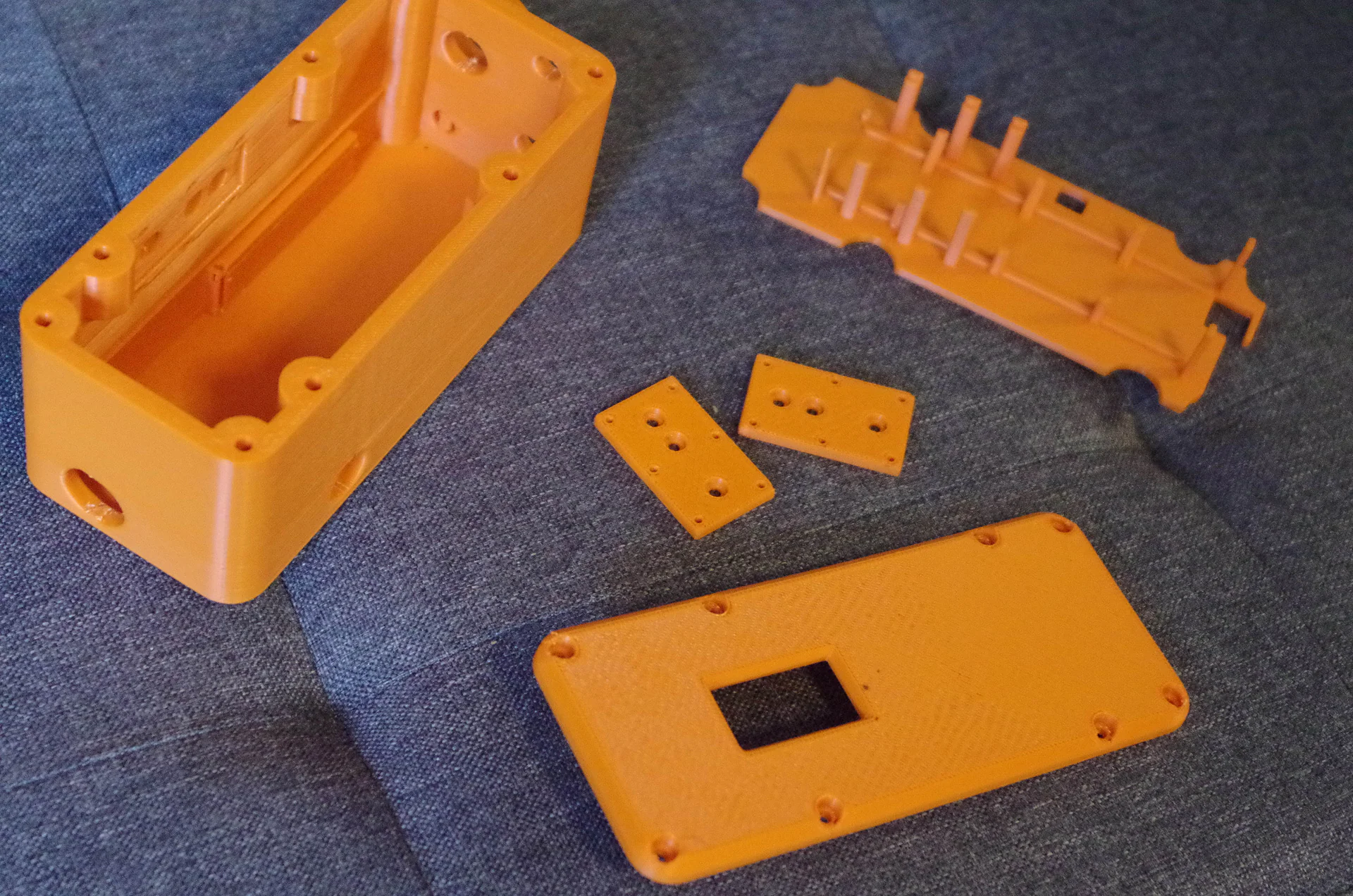
16 October 2026: enclosure fit check
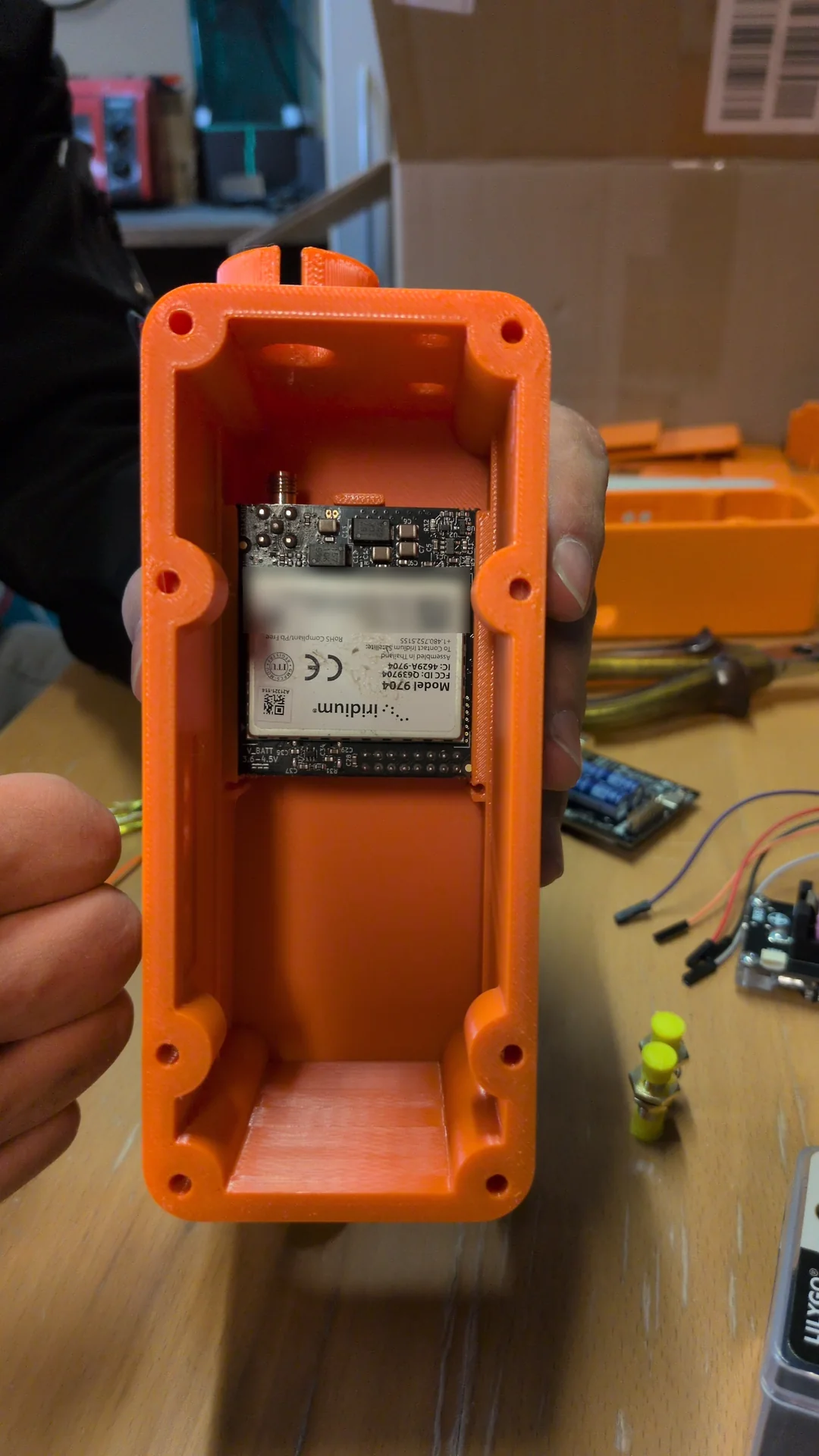
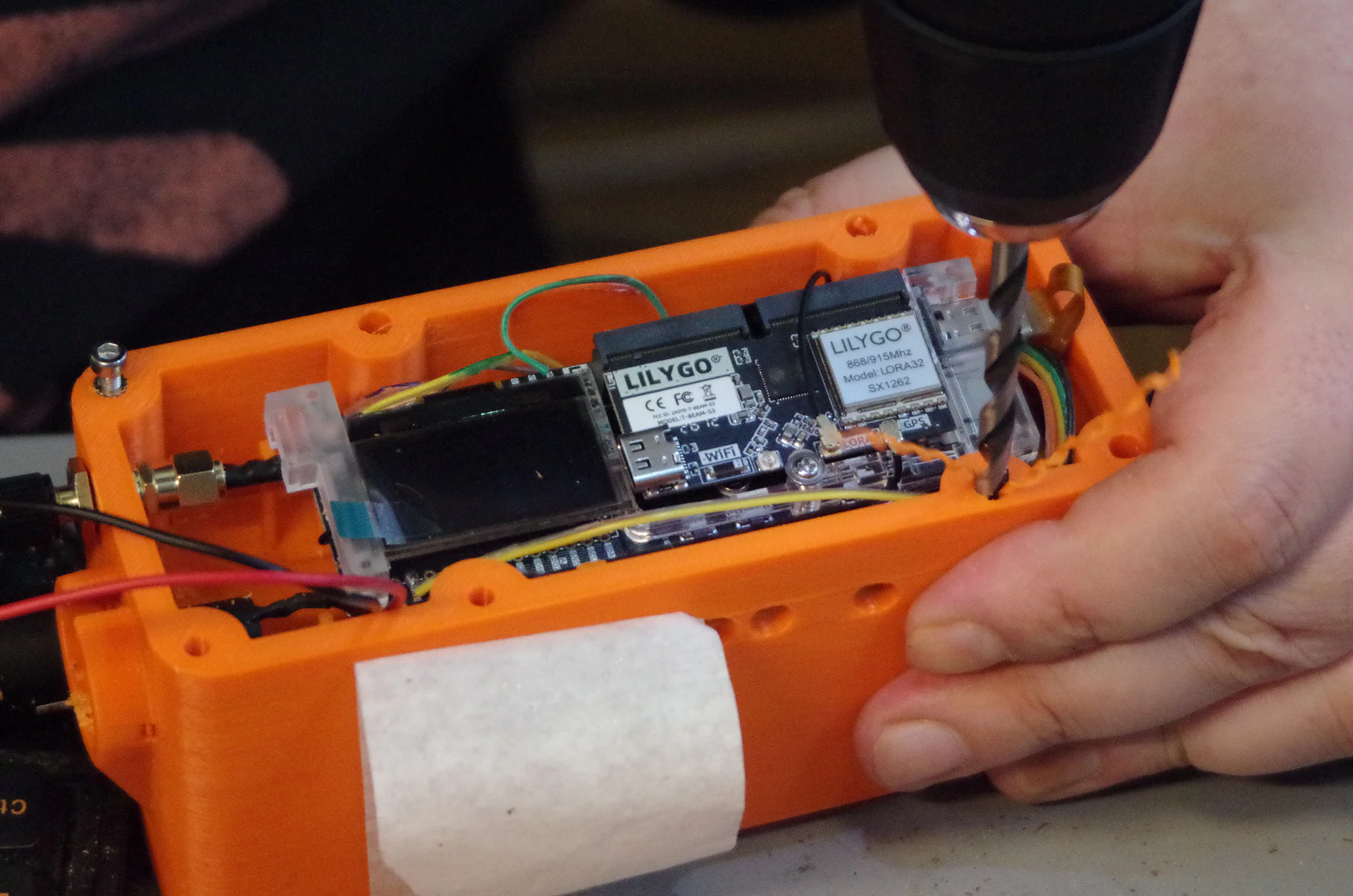
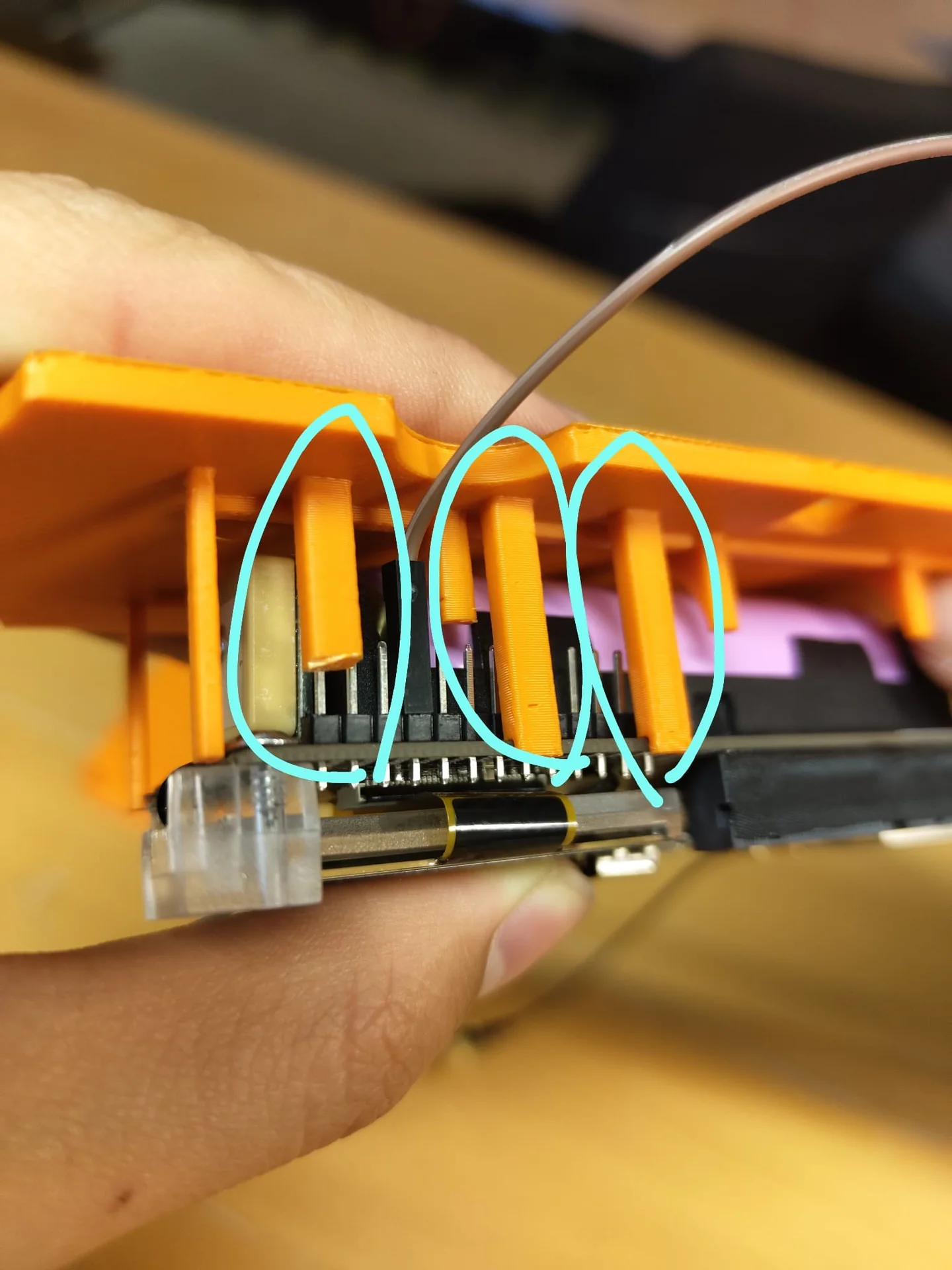
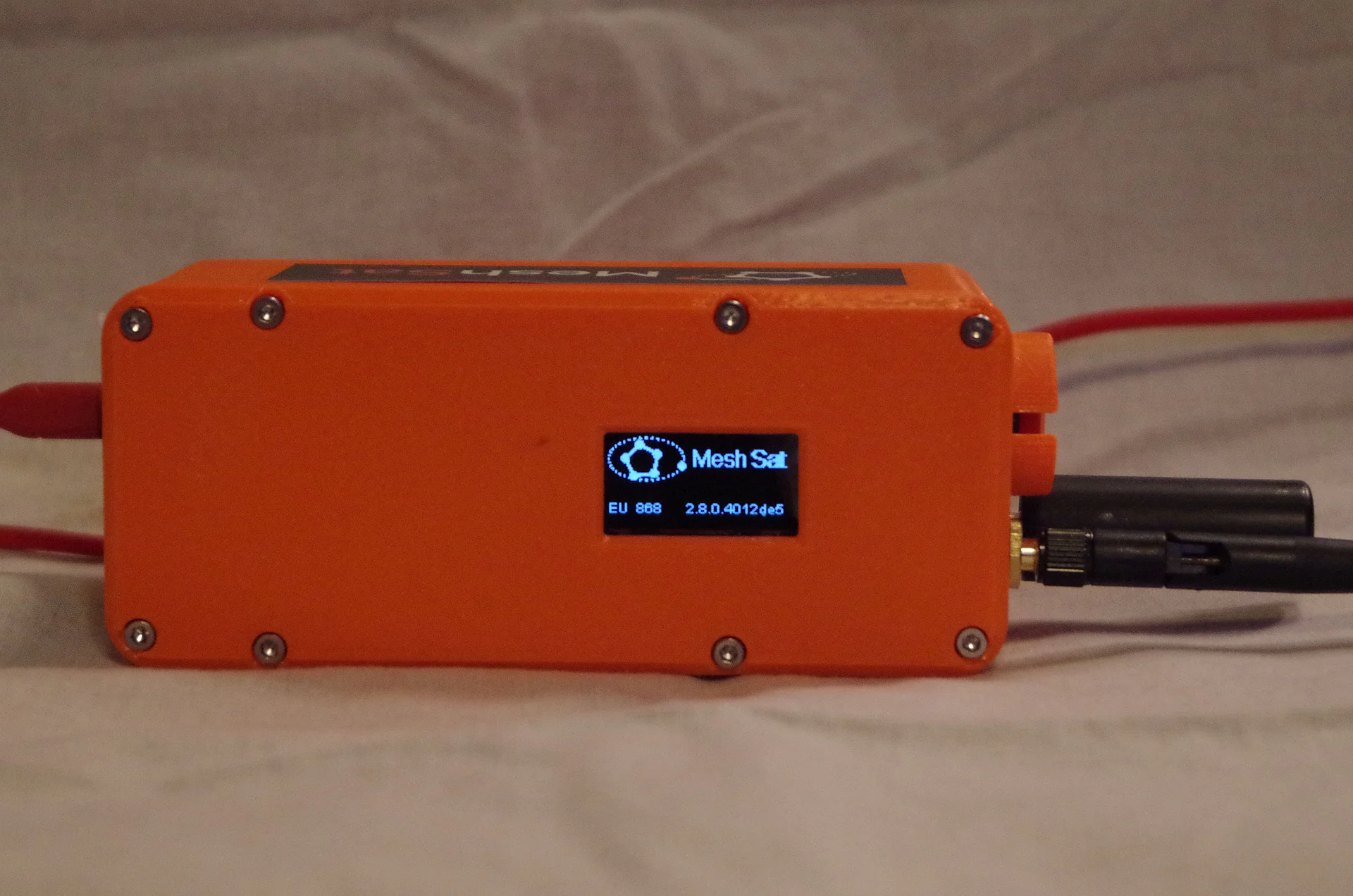
Photographs taken in Leiden document the printed enclosure fit and assembly.
8 October 2026: Android detection and reconnect
Android 2.19.9 selected the reported 9704 driver and brought the modem up; 2.19.10 recovered after a node restart. This establishes the documented Android bench path.
8 October 2026: mesh routing without a phone
A text from the configured mesh channel reached the modem in 190 ms. This establishes standalone mesh-to-modem routing, not satellite delivery.
8 October 2026: modem communication
Through the node’s Bluetooth pipe, the modem answered its JSPR protocol, registered as active and accepted a text payload. This establishes node-to-modem communication on the bench. The text was not transmitted through satellite.
Mesh mode: proven on the earlier node, expected on MSC-2
In mesh mode the team’s radios reach the satellite through the gateway with no phone. That was proven on the earlier RockBLOCK 9603 node on 27 September 2026 (below). MSC-2 uses the same routing and has passed the bench step into its modem, so we expect the same result; the satellite leg in mesh mode is the next test on the complete unit.
The modem and satellite entries come from the node’s dated bench record. The build photographs are below.
Estimates
- Mesh range: about 2 to 5 km between radios in towns and woods, up to about 11 km in clear line of sight.
- Battery: about a day on one charge with everything on standby; each satellite message uses about a minute of that.
- Charging: about 8 hours from empty over USB-C.
- Temperature: built for −10 to 50 °C, charging at 0 to 45 °C.
- Weather: O-ring seals and a membrane vent, built for rain. Not for submersion.
Estimates from the parts’ published figures.
Earlier node / RockBLOCK 9603
On 27 September 2026, an earlier node routed a message from a T-Deck over LoRa and Iridium to the Hub, and brought a reply back. That build used a RockBLOCK 9603 and Iridium SBD. It is evidence for that earlier build. MSC-2 uses the same routing with its 9704 IMT modem; its own mesh-mode satellite test is next.
The recorded exchange
The following text is transcribed from the retained satellite-provider log. The T-Deck sent through the local mesh to the earlier node, with no phone connected to the gateway. The reply was sent from the Hub. Receipt of “tst to tdeckplus” on the T-Deck was confirmed by the tester.
| Time | Direction | Record |
|---|---|---|
| Field to Hub | tst from tdeckplus | |
| Hub to field | tst to tdeckplus, queued at the provider | |
| Node fetch | Satellite session with no outgoing payload; the node fetched the waiting reply |
Device identifiers are omitted; the message wording and times are unchanged. In this recorded exchange, the provider queued the reply at 11:21:35 UTC and the node fetched it 14 seconds later. The tester’s receipt confirmation is separate from the provider timestamps.
This is a mesh ↔ satellite ↔ Hub browser record on the earlier 9603 hardware. The SMS walkthrough on the shop illustrates a configured Hub route; it is not a transcript of this test.
The earlier-node documentation includes those results and the older hardware versions. The build guide also describes earlier hardware; check the model before following it.
App release and compatibility
Android sent and received satellite messages through unit 0001 on 24 October 2026. MeshSat iOS is available on the App Store, checked 28 October 2026. See the iOS documentation for platform limits. Store availability is separate from hardware compatibility: the published iOS satellite tests use a 9603 node and do not establish MSC-2 support.
Building prototype unit 0001
On the bench / 23 and 24 October 2026
The prototype takes shape.
Real photos from Leiden: the evening of 23 October when prototype unit 0001 got its satellite modem wired in, and the work of 24 October. On 24 October it sent and received its first satellite messages.